Tiago Cardoso

Bueno, Pedro, Tiago Cardoso, and Pedro Delgado. "Game Wizard." VideoJogos'2014. 2014. Abstract

Nowadays there is a clear increase of products or tailored solutions with the goal of better adept to the needs of
clients. In another context there is a wide growth of computers’ presence in the class rooms, in order to assist
the teacher to captivate and motivate the students using educational games. However not all teachers have the
advanced computer knowledge that would allow them to personalize games, which would benefit children by
providing tailored solutions to their specific needs. Having this problem into consideration it was designed/idealized a system that relies on a framework of game creation that allows a user with less informatics skills to create a game based on a model. Although there are many games of this type it would be useful and innovative for a teacher to be able to create a game that is personalized to the students’ needs and according to the skills that they wish to develop. This system consists in an interface where the user has to follow some established steps, in order to achieve a file containing all the game features, which is later imported to
a framework. That system allows the creation of different games, as long as these games come under the same game mechanics.

Rosas, João, Gonçalo Carvalho, Yves Rybarczyk, and Tiago Cardoso. "Development of an Ambient Assisted Living." Enterface 2013 Proceedings. Springer, 2014.
Cardoso, Tiago, João Gameiro, João Rosas, and Yves Rybarczyk. "KINECT-SIGN: Teaching Sign Language to "Listeners" through a Game." nternational Summer Workshop on Multimodal Interfaces - Enterface 2013 Proceedings. Springer, 2014. Abstract

Sign language is the hearing impaired form of communicating with other people, including listeners. Most cases, impaired people have learned sign language form childhood. The problem arises when a listener comes in contact with an impaired person. For instances, if a couple has a child which is impaired, the parents find a challenge to learn the sign language. In this article, a new playful approach to assist the listeners to learn sign language is proposed. This proposal is a serious game composed of two modes: School-mode and Competition-mode. The first offers a virtual school where the user learns to sign letters and the second offers an environment towards applying the learned letters. Behind the scenes, the proposal contains a sign language recognition system, based on three modules: 1 – the standardization of the Kinect depth camera data; 2 – a gesture library relying on the standardized data; and 3 – the real-time recognition of gestures. A prototype was developed – Kinect-Sign – and tested in a Portuguese Sign-Language school and on eNTERFACE’13 resulting in a joyful acceptance of the approach.

Rybarczyk, Yves, Tiago Cardoso, Tiago Coelho, Rita Oliveira, and João Rosas. "Body Ownership of Virtual Avatars: An affordance Approach of Telepresence." Enterface 2013 Proceedings. Springer, 2014. Abstract

Virtual environments are an increasing trend in today’s society. In this scope, the avatar is the representation of the user in the virtual world. However, that relationship lacks empirical studies regarding the nature of the interaction between avatars and human beings. For that purpose it was studied how the avatar’s modeled morphology and dynamics affect its control by the user. An experiment was conducted to measure telepresence and ownership on participants who used a Kinect Natural User Interface (NUI). The body ownership of different avatars was assessed through a behavioral parameter, based on the concept of affordances, and a questionnaire of presence. The results show that the feelings of telepresence and ownership seem to be greater when the kinematics and the avatar’s proportions are closer to those of the user.

Cardoso, Tiago Proactive Services Ecosystem Framework”. Universidade Nova de Lisboa. Lisboa, 2012. Abstractcardoso_2012.pdf

Collaborative-Networks (CN) have experienced a fast evolution in the last two decades. The
collaboration among independent entities or professionals supported by Information and
Communication Technology (ICT) has attracted the research community to establish the
conceptual basis for this scientific discipline. Service Orientation has been one of the key selected
paradigms for that conceptual basis. Nevertheless, the service concept itself does not have a
common understanding in the Business and ICT worlds. In the former, client satisfaction,
resources management and business process models are some example concerns, whilst the later
deals with interoperability, remote function calling or communication protocols.
If for example an enterprise provides some service, it may hire specialists to wrap such
service into web-services, expecting to reach worldwide potential new clients. In fact, nowadays
Web Services and Service Oriented Architectures (SOA) are the technological elements most
commonly used. However, these are passive elements in the sense they do not perform any action
towards pursuing business interests, which constitute a limiting factor from a business
perspective. Another approach for the above mentioned enterprise is to follow the Multi-Agent
Systems (MAS) approach, as the pro-activity is a keyword in such contexts. Nevertheless, as
MAS approaches are not so commonly used and not so robust yet, the worldwide potential set of
new clients is reduced; which also constitutes an inhibitor factor from the business perspective.
This dissertation proposes a Pro-Active Services Ecosystem Framework, gathering
inspiration from both the SOA and MAS research areas, trying to bridge the business and ICT
worlds through the base concepts for the creation of a Services’ Ecosystem where business
services are represented in a pro-active manner towards pursuing business interests, like finding
collaboration opportunities or improving the chances each CN member has to see its services
selected among competitors, for example. This work also includes a prototype system applied /
validated in the area of a Professional Virtual Community of Senior Professionals.

Camarinha-Matos, L. M., H. Afsarmanesh, T. Cardoso, and E. Klen. "A reference curriculum for education in collaborative networks." Methods and Tools for Collaborative Networked Organizations. 2008. 491-511. Abstract

A proposal for a reference curriculum for teaching Collaborative Networks at university level is introduced. This curriculum is based on the experience of the authors in teaching and disseminating corresponding concepts in the context of several international projects as well as on the findings of a survey conducted worldwide. A set of teaching units and the corresponding content are introduced. Guidelines for the application of the curriculum are given. A set of experiments and projects are also suggested as a support for the accompanying hands-on lab work. Finally, one concrete experience of application of the proposed curriculum is described.

Camarinha-Matos, L. M., and T. Cardoso. "Education on Virtual Organizations: An experience at UNL." Virtual Enterprises and Collaborative Networks, Kluwer Academic Publishers. ISBN 1-4020-8138-3 (2004): 579-588. Abstract

The introduction of new courses on virtual organizations at the engineering education level is an important element for the broad acceptance of this new paradigm. This article summarizes the experience with an initiative of teaching Virtual Enterprises / Virtual Organizations subjects to Electrical and Computer Engineering students. The course structure, both in its lecture and lab work components, is described. Finally, some lessons learned with two editions of this course are presented.

Cardoso, Tiago, L. M. Camarinha-Matos, and K. Menzel. "ICT support infrastructures and interoperability for VOs." Virtual Organisations Cluster - VOSTER WP4.4 (2003). Abstract

The design and development of a transparent, easy to use and affordable ICT infrastructure is a key pre-requisite for the effective large-scale implementation of the collaborative network organizations such as virtual organizations, professional virtual communities, e-science communities, etc. This chapter introduces an overview of the main classes of infrastructures required by different types of virtual organizations and summarizes the main approaches followed by a number of research projects in the area.

Velocidade Leitora

Aluno / Autor: Francisco Ferreira
Jogo Desenvolvido para o Centro Diferenças - Centro de Desenvolvimento Infantil, em particular com o auxilio da Dr. Daniel Neves Dias e Dra. Fátima Trindade

Ortografar

Aluno / Autor: Rui Pacheco
Jogo Desenvolvido para o Centro Diferenças - Centro de Desenvolvimento Infantil, em particular com o auxilio da Dr. Daniel Neves Dias e Dra Fátima Trindade

Univerbis

Aluno / Autor: João Oliveira
Jogo Desenvolvido para o Centro Diferenças - Centro de Desenvolvimento Infantil, em particular com o auxilio da Dra. Evelona Brígido

Canto das Histórias

Aluno / Autor: João Mendes
Jogo Desenvolvido para o Centro Diferenças - Centro de Desenvolvimento Infantil, em particular com o auxilio da Dra Sónia Martins e Dra Bárbara Pereira

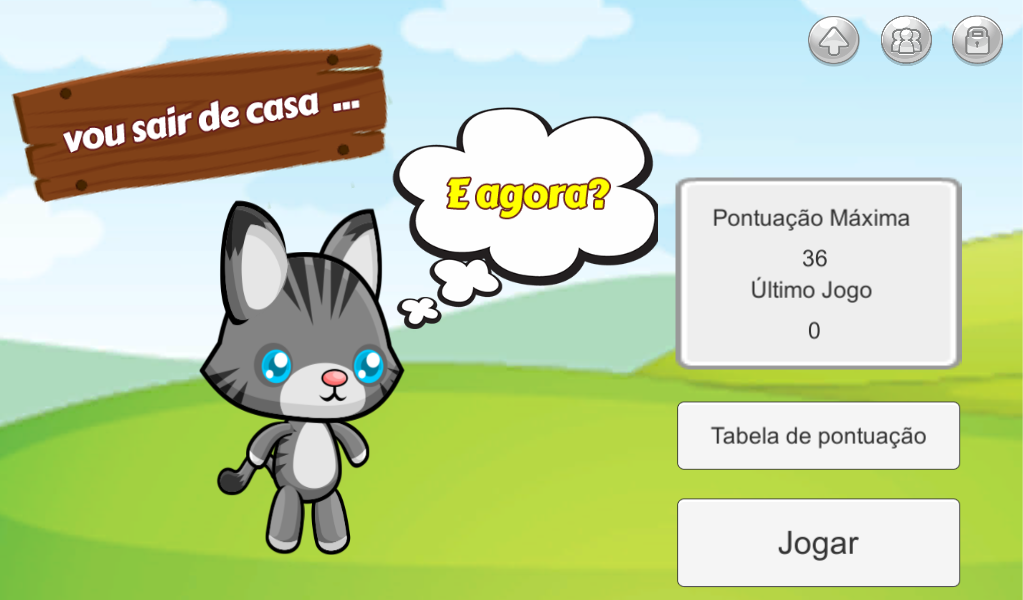
“Vou sair de Casa … e agora?!”

Aluno / Autor: Pedro Mesquita
Jogo Desenvolvido para o Centro Diferenças - Centro de Desenvolvimento Infantil, em particular com o auxilio da Dra. Evelina Brigido

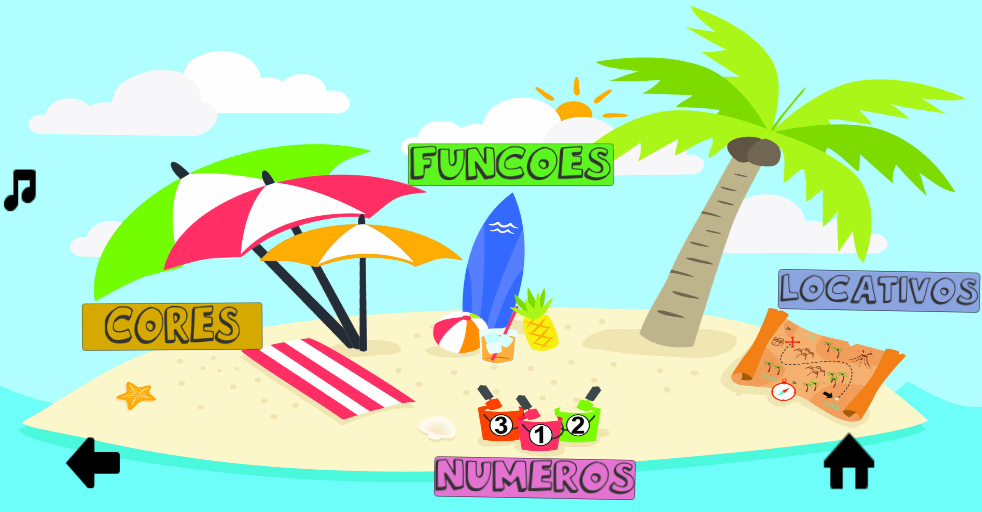
Ilha dos Números

Aluno / Autor: José Mendes
Jogo Desenvolvido para o Centro Diferenças - Centro de Desenvolvimento Infantil, em particular com o auxilio da Dra Sofia Brás Monteiro

“Super Eu!”

Aluno / Autor: Daniel Fernandes
Jogo Desenvolvido para o Centro Diferenças - Centro de Desenvolvimento Infantil, em particular com o auxilio da Dra Mariana Mendonça

Cálculo a Brincar

Aluno / Autor: Bruno Campos
Jogo Desenvolvido para o Centro Diferenças - Centro de Desenvolvimento Infantil, em particular com o auxilio da Dra. Bárbara Pereira

NutriPsi

Aluno / Autor: Cláudio Costa
Jogo Desenvolvido para o Centro Diferenças - Centro de Desenvolvimento Infantil, em particular com o auxilio da Dra. Rita Gomes, Dra. Joana Almeida e Dra. Ana Raimundo

Bê-á-bá

Aluno / Autor: Leonardo Espada
Jogo Desenvolvido para o Centro Diferenças - Centro de Desenvolvimento Infantil, em particular com o auxilio da Dra. Elisabeth Vieira

Falar Pelos Cotovelos

Aluno / Autor: Pedro Leandro
Jogo Desenvolvido para o Centro Diferenças - Centro de Desenvolvimento Infantil, em particular com o auxilio da Dra. Sofia Monteiro