Export 48 results:
Sort by: Author Title Type [ Year  (Desc)]
Submitted
Cain, Alan J., Ricardo P. Guilherme, and António Malheiro. "Quasi-crystals for arbitrary root systems and associated generalizations of the hypoplactic monoid." (Submitted). AbstractWebsite

n/a

2022
2018
2017
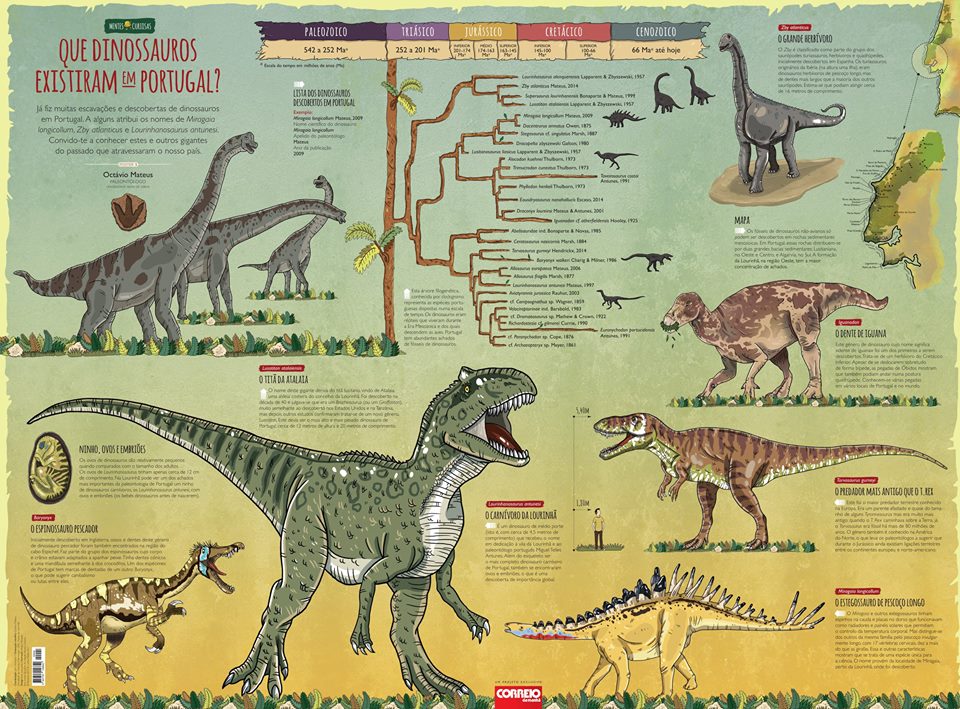
Mateus, O. Que Dinossauros Existiram em Portugal?. Poster 80x59 cm, as a supplement of newspaper “Correio da Manhã” of 16 September 2017, 2017.poster_correio_da_manha.jpg
2016
Guimarães, D., A. A. Dias, M. Carvalho, M. L. Carvalho, J. P. Santos, F. R. Henriques, F. Curate, and S. Pessanha. "Quantitative determinations and imaging in different structures of buried human bones from the XVIII-XIXth centuries by energy dispersive X-ray fluorescence – Postmortem evaluation." Talanta. 155 (2016): 107-115. AbstractWebsite

Talanta, 155 + (2016) 107-115. doi:10.1016/j.talanta.2016.04.028

Goulão, Miguel, Vasco Amaral, and Marjan Mernik. "Quality in model-driven engineering: a tertiary study." Software Quality Journal. 24.3 (2016): 601-633. AbstractWebsite

Model-driven engineering (MDE) is believed to have a significant impact in software quality. However, researchers and practitioners may have a hard time locating consolidated evidence on this impact, as the available information is scattered in several different publications. Our goal is to aggregate consolidated findings on quality in MDE, facilitating the work of researchers and practitioners in learning about the coverage and main findings of existing work as well as identifying relatively unexplored niches of research that need further attention. We performed a tertiary study on quality in MDE, in order to gain a better understanding of its most prominent findings and existing challenges, as reported in the literature. We identified 22 systematic literature reviews and mapping studies and the most relevant quality attributes addressed by each of those studies, in the context of MDE. Maintainability is clearly the most often studied and reported quality attribute impacted by MDE. Eighty out of 83 research questions in the selected secondary studies have a structure that is more often associated with mapping existing research than with answering more concrete research questions (e.g., comparing two alternative MDE approaches with respect to their impact on a specific quality attribute). We briefly outline the main contributions of each of the selected literature reviews. In the collected studies, we observed a broad coverage of software product quality, although frequently accompanied by notes on how much more empirical research is needed to further validate existing claims. Relatively, little attention seems to be devoted to the impact of MDE on the quality in use of products developed using MDE.

2015
Amaro, Pedro, Filippo Fratini, Laleh Safari, Aldo Antognini, Paul Indelicato, Randolf Pohl, and Jose Paulo Santos. "Quantum interference shifts in laser spectroscopy with elliptical polarization." Physical Review A. 92 (2015): 062506-5. AbstractWebsite
n/a
Amaro, Pedro, Beatrice Franke, Julian J. Krauth, Marc Diepold, Filippo Fratini, Laleh Safari, Jorge Machado, Aldo Antognini, Franz Kottmann, Paul Indelicato, Randolf Pohl, and Jose Paulo Santos. "Quantum interference effects in laser spectroscopy of muonic hydrogen, deuterium, and helium-3." Physical Review A. 92 (2015): 022514-7. AbstractWebsite
n/a
Coelho, Helena, T. Matsushita, G. Artigas, H. Hinou, FJ Cañada, R. Lo-Man, C. Leclerc, E. J. Cabrita, J. Jiménez-Barbero, S. - I. Nishimura, F. Garcia-Martín, and F. Marcelo. "The Quest for Anticancer Vaccines: Deciphering the Fine-Epitope Specificity of Cancer-Related Monoclonal Antibodies by Combining Microarray Screening and Saturation Transfer Difference NMR." J. Am. Chem. Soc.. 137 (2015): 12438-12441.
Zivy, Michel, Stefanie Wienkoop, Jenny Renaut, Carla Pinheiro, Estelle Goulas, and Sebastien Carpentier. "The quest for tolerant varieties: the importance of integrating "omics" techniques to phenotyping." Frontiers in Plant Science. 6 (2015). Abstract
n/a
2014
Fratini, F., L. Safari, A. G. Hayrapetyan, K. Jankala, P. Amaro, and J. P. Santos. "Quantized form factor shift in the presence of free electron laser radiation." EPL (Europhysics Letters). 107 (2014): 13002. AbstractWebsite

In electron scattering, the target form factors contribute significantly to the diffraction pattern and carry information on the target electromagnetic charge distribution. Here we show that the presence of electromagnetic radiation, as intense as currently available in free electron lasers, shifts the dependence of the target form factors by a quantity that depends on the number of photons absorbed or emitted by the electron as well as on the parameters of the electromagnetic radiation. As example, we show the impact of intense ultraviolet and soft X-ray radiation on elastic electron scattering by the Ne-like argon ion and by the xenon atom. We find that the shift brought by the radiation to the form factor is of the order of some percent. Our results may open up a new avenue to explore matter with the assistance of laser.

Fratini, F., L. Safari, A. G. Hayrapetyan, K. Jankala, P. Amaro, and J. P. Santos. "Quantized form factor shift in the presence of free electron laser radiation." EPL (Europhysics Letters). 107 (2014): 13002. AbstractWebsite

In electron scattering, the target form factors contribute significantly to the diffraction pattern and carry information on the target electromagnetic charge distribution. Here we show that the presence of electromagnetic radiation, as intense as currently available in free electron lasers, shifts the dependence of the target form factors by a quantity that depends on the number of photons absorbed or emitted by the electron as well as on the parameters of the electromagnetic radiation. As example, we show the impact of intense ultraviolet and soft X-ray radiation on elastic electron scattering by the Ne-like argon ion and by the xenon atom. We find that the shift brought by the radiation to the form factor is of the order of some percent. Our results may open up a new avenue to explore matter with the assistance of laser.

2013
Alferes, José Júlio, Matthias Knorr, and Terrance Swift. "Query-Driven Procedures for Hybrid MKNF Knowledge Bases." ACM Transactions On Computational Logic. 14.2 (2013). Abstracttocl13.pdf

n/a

D. Algarvio, Maria Margarida Rolim Augusto Lima, Cunha M. L. "Quality Improvement of Recycled Aggregates from a Construction and Demolition Waste Recycling Pilot Plant." Advanced Materials Forum Vi. 730-732 (2013): 630-635 .
Cunha, Jácome, João Paulo Fernandes, Jorge Mendes, Rui Pereira, and João Saraiva. "Querying Model-Driven Spreadsheets." Proceedings of the 2013 IEEE Symposium on Visual Languages and Human-Centric Computing. VLHCC '13. Washington, DC, USA: IEEE Computer Society, 2013. 83-86. Abstractvlhcc2013-query.pdf

Spreadsheets are being used with many different purposes that range from toy applications to complete information systems. In any of these cases, they are often used as data repositories that can grow significantly. As the amount of data grows, it also becomes more difficult to extract concrete information out of them. This paper focuses on the problem of spreadsheet querying. In particular, we propose an expressive and composable technique where intuitive queries can be defined. Our approach builds on a model-driven spreadsheet development environment, and queries are expressed referencing entities in the model of a spreadsheet instead of in its actual data. Finally, the system that we have implemented relies on Google's query function for spreadsheets.

Belo, Orlando, Jácome Cunha, João Paulo Fernandes, Jorge Mendes, Rui Pereira, and João Saraiva. "QuerySheet: A Bidirectional Query Environment for Model-Driven Spreadsheets." Proceedings of the 2013 IEEE Symposium on Visual Languages and Human-Centric Computing. VLHCC '13. Washington, DC, USA: IEEE Computer Society, 2013. 199-200. Abstractvlhcc2013-td.pdf

This paper presents a tool, named QUERYSHEET, to query spreadsheets. We defined a language to write the queries, which resembles SQL, the language to query databases. This allows to write queries which are more related to the spreadsheet content than with current approaches.

2012
Cunha, Jácome, João Paulo Fernandes, Christophe Peixoto, and João Saraiva. "A Quality Model for Spreadsheets." Proceedings of the 8th International Conference on the Quality of Information and Communications Technology, Quality in ICT Evolution Track. 2012. 231-236. Abstractquatic2012.pdf

In this paper we present a quality model for spreadsheets, based on the ISO/IEC 9126 standard that defines a generic quality model for software. To each of the software characteristics defined in the ISO/IEC 9126, we associate an equivalent spreadsheet characteristic. Then, we propose a set of spreadsheet specific metrics to assess the quality of a spreadsheet in each of the defined characteristics. In order to obtain the normal distribution of expected values for a spreadsheet in each of the metrics that we propose, we have executed them against all spreadsheets in the large and widely used EUSES spreadsheet corpus. Then, we quantify each characteristic of our quality model after computing the values of our metrics, and we define quality scores for the different ranges of values. Finally, to automate the atribution of a quality score to a given spreadsheet, according to our quality model, we have integrated the computation of the metrics it includes in both a batch and a web-based tool.

2011
Barišić, Ankica, Vasco Amaral, Miguel Goulão, and Bruno Barroca. "Quality in Use of DSLs: Current Evaluation Methods." 3rd INForum - Simpósio de Informática (INForum2011). Coimbra, Portugal 2011. Abstractinforum_2011_submission_174.pdf

Domain Speci c Languages (DSLs) are claimed to contribute
to increment productivity, while reducing the required maintenance and
programming expertise. In this context, the usability of these languages
becomes a major issue: if the language is not easy to learn and use, it is
unlikely to be successfully adopted.

It is important to foster high quality DSLs during its engineering process.
We argue that a systematic approach based on User Interface Experi-
mental validation techniques should be used to assess the impact of the
introduction of DSLs in the productivity of DSL user. Productivity can
be fostered by assessing important usability attributes early in the lan-
guage construction . This work's contribution, besides highlighting the
problem of the absence of systematic approaches for experimental vali-
dation of DSLs in general, is to identify existing evaluation approaches
that can be adapted from the eld of User Interfaces.

Knorr, Matthias, and José Júlio Alferes. "Querying OWL 2 QL and Non-monotonic Rules." The Semantic Web - ISWC 2011 - 10th International Semantic Web Conference Science. Springer, 2011. 338-353. Abstractiswc11.pdf

n/a

Barišić, Ankica, Vasco Amaral, Miguel Goulão, and Bruno Barroca. "Quality in Use of Domain Specific Languages: a Case Study." 3rd ACM SIGPLAN workshop on Evaluation and Usability of Programming Languages and Tools (PLATEAU 2011). Portland, USA: ACM, 2011. 65-72. Abstractplateau2011-barisic.pdf

Domain Specific Languages (DSLs) are claimed to increment productivity, while reducing the required maintenance and programming expertise. In this context, DSLs usability is a key factor for its successful adoption.

In this paper, we propose a systematic approach based on User Interfaces Experimental validation techniques to assess the impact of the introduction of DSLs on the productivity of domain experts. To illustrate this evaluation approach we present a case study of a DSL for High Energy Physics (HEP).

The DSL on this case study, called Pheasant (PHysicist’s EAsy Analysis Tool), is assessed in contrast with a pre-existing baseline, using General Purpose Languages (GPLs) such as C++. The comparison combines quantitative and qualitative data, collected with users from a real-world setting. Our assessment includes Physicists with programming experience with two profiles; ones with no experience with the previous framework used in the project and other experienced.

This work’s contribution highlights the problem of the absence of systematic approaches for experimental validation of DSLs. It also illustrates how an experimental approach can be used in the context of a DSL evaluation during the Software Languages Engineering activity, with respect to its impact on effectiveness and efficiency.